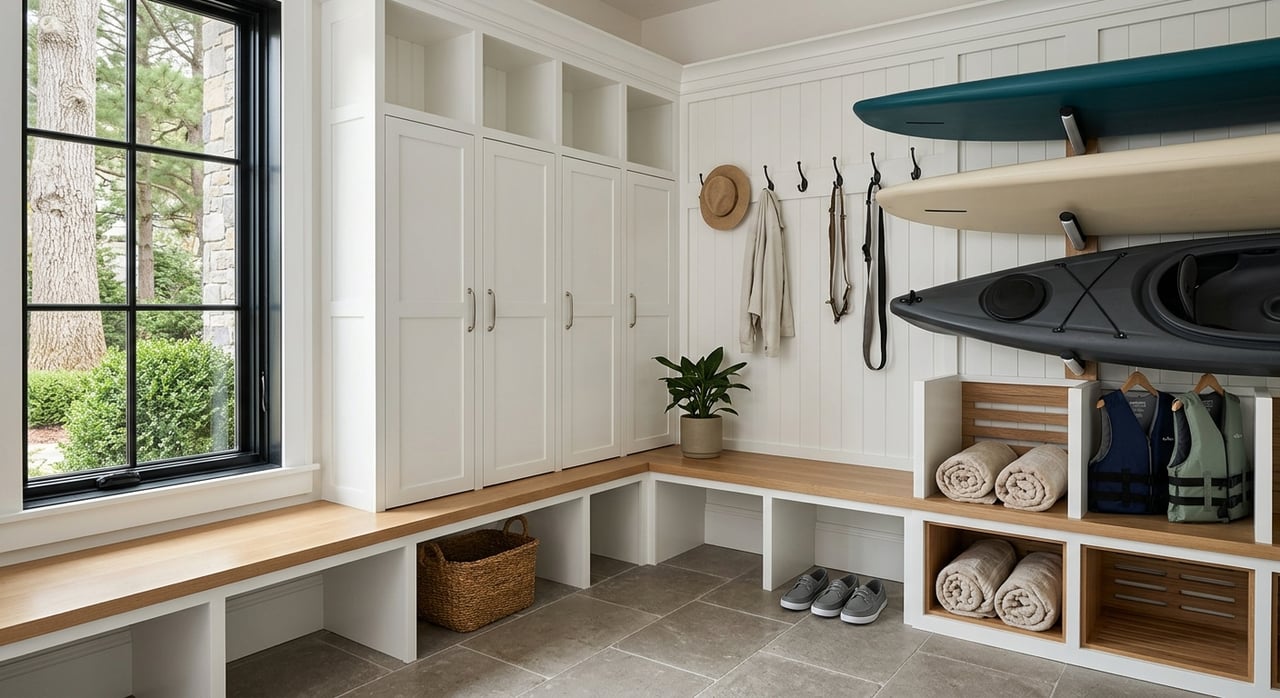
Your lake house can feel like a dream on Saturday morning and a gear explosion by Sunday night. Between life jackets, paddleboards, floats, tow ropes, and boat bags, it does not take much for a Smith Lake home to feel crowded fast. The good news is that smart storage can make lake living easier, safer, and less stressful, especially when you plan around how Smith Lake actually works. Let’s dive in.
Why Smith Lake storage needs a plan
Smith Lake is not just any lake setting. Alabama Power lists Smith Lake at 21,200 acres with 642 miles of shoreline, and it manages the lake as a storage reservoir with seasonal summer and winter pool levels.
That matters for how you store gear near the shoreline. Water conditions can change with seasonal drawdown, so dockside and shoreline storage should be easy to move, quick to empty, and built with changing conditions in mind.
If you own a full-time home or a second home here, that practical layer makes a big difference. A good setup helps you protect your gear, reduce clutter, and stay ready for a day on the water.
Start with a grab-and-go launch zone
One of the best storage ideas for a Smith Lake home is also one of the simplest. Create a launch zone near the garage door, lower-level entry, or path to the dock so your most-used gear is always together.
Alabama requires one wearable life jacket for each person on board, and recreational vessels 16 feet and longer must also have one throwable PFD. Wearable life jackets must be U.S. Coast Guard-approved, in good condition, properly sized, and readily accessible.
That is why it helps to keep your boating essentials in one easy spot instead of scattering them across closets and storage rooms. When you are heading out quickly, you want to know exactly where everything is.
What to keep in the launch zone
- Life jackets in the sizes you use most
- Throwable PFD for qualifying boats
- Tow ropes
- Dry bags
- Boat keys
- Sunscreen
- First-aid items
- Water shoes or sandals
A bench, a few hooks, and labeled bins can go a long way here. If you have kids or frequent guests, this kind of setup also makes it easier for everyone to help put things back in the right place.
Give wet gear its own drying area
Wet life jackets and towels are often the biggest source of lake-house clutter. If they end up on floors, railings, or furniture, your home starts to feel messy even when everything else is in order.
A dedicated drying zone solves that problem. In many Smith Lake homes, the best spot is a mudroom, garage wall, basement entry, or covered area just inside from the lake side.
Smart features for a drying zone
- Wall hooks for life jackets
- Mesh bins for wet gear
- A bench for changing shoes
- A drip tray or waterproof mat below hanging items
- A laundry basket for towels and swimwear
Because Alabama requires life jackets to be readily accessible, this setup does double duty. It helps gear dry out without taking over the house, and it keeps safety items easy to find before the next boat ride.
Use vertical storage for big lake toys
Paddleboards, kayaks, and bulky floats can eat up floor space quickly. If your garage already has a vehicle, golf cart, or workshop area, floor storage gets crowded fast.
Vertical wall racks are often the easiest fix. They keep long, awkward gear off the ground and make better use of wall space that might otherwise sit empty.
For lighter seasonal items like inflatables and oversized floats, ceiling storage can work well too. This is especially helpful in garages or lower-level utility spaces where you want clear walking paths and room for everyday use.
Best candidates for wall or ceiling storage
- Paddleboards
- Kayaks
- Wakeboards
- Water skis
- Inflatable floats
- Towable tubes
Choose storage hardware that is sturdy and corrosion-resistant, especially in spaces that stay humid. On Smith Lake, that small detail can help your setup last longer with less upkeep.
Be careful with dockside closets and shoreline sheds
This is where local knowledge really matters. On Smith Lake, a dockside storage room or shoreline shed is not just a design choice. It may also involve Alabama Power shoreline rules and permit considerations.
Alabama Power’s shoreline guidelines cover structures and related activity near the water, including docks, staircases, boathouses, access ramps, decks, and grading. The guidelines also state that covered structures must remain open, with only limited approved enclosed storage areas.
Walled storage buildings, sheds, or boat-storage facilities in the flood-easement area must be elevated or vented so water can freely enter and exit. Habitation is not allowed in those walled storage structures.
What this means for homeowners
- Verify shoreline rules before building enclosed storage near the water
- Do not assume a dockside closet or shed is automatically allowed
- Plan for flood-aware design if storage sits in the flood-easement area
- Keep shoreline storage simple, portable, and easy to clear out
This is one of those areas where buyers and owners benefit from having truly local guidance. On Smith Lake, the smartest storage ideas are the ones that fit both your lifestyle and the lake’s rules.
Make shoreline storage portable
Because Smith Lake has seasonal water-level changes, shoreline gear should be stored with flexibility in mind. Even if your setup works perfectly in summer, it may need to be adjusted in late fall and winter.
That is why portable storage works so well here. Labeled bins, movable deck boxes, and simple shelving that can be emptied quickly are often more practical than permanent, hard-to-adapt solutions.
Features that work well near the shoreline
- Labeled bins for ropes, cleaning supplies, and float accessories
- Corrosion-resistant hooks and hardware
- Storage pieces that are easy to lift or relocate
- Containers that drain and dry easily
- Simple systems that can be emptied fast
Alabama Power also advises lake users to stay aware of current conditions, use caution in shallow or unfamiliar areas, and adjust boats or docks as needed. A flexible storage setup fits that same real-life approach.
Split gear between the boat and the house
A common mistake in lake homes is trying to store everything in one place. In reality, the easiest system usually splits items by how and when you use them.
Think of it this way: some gear should always be ready to go with the boat, while other items are better stored in the house or garage where they stay cleaner, drier, and easier to rotate seasonally.
Good items for a boat bag
- Small dry bags
- Sunscreen
- Basic first-aid supplies
- Towels for quick outings
- Sunglass straps
- Waterproof phone pouches
Better items for house storage
- Extra life jackets by size
- Off-season floats
- Backup ropes
- Cleaning supplies
- Water toys used less often
- Guest gear for busy weekends
If you use personal watercraft, Alabama requires riders and people being towed to wear a PFD. Qualifying craft must also use a lanyard-type engine cut-off switch attached to the operator, clothing, or PFD. Keeping those essentials grouped together can make launch time much smoother.
Plan an off-season rotation
If your Smith Lake home is a second home, seasonal rotation matters even more. You may not be there every week, and leaving everything out year-round can create clutter and extra wear.
A simple off-season routine can keep your home looking better and make each return trip easier. At the end of the busy season, move less-used items into elevated or dehumidified basement or utility storage, and keep only your core boating and safety gear in the active zone.
A simple second-home rotation plan
- Keep current-season life jackets and boating basics near the exit or dock path.
- Move bulky floats and duplicate gear to elevated indoor storage.
- Label bins by activity, such as tubing, fishing, paddleboarding, or kids’ gear.
- Empty and dry shoreline storage before long gaps between visits.
- Recheck your launch zone before peak weekends and holidays.
This approach is low-fuss, which fits the way many people want to enjoy Smith Lake. You spend less time hunting for gear and more time actually using the property.
Storage ideas that help resale too
Smart storage is not only about convenience. It also helps your home show better if you ever decide to sell.
Lake buyers often notice where they would put life jackets, floats, paddleboards, and boat supplies. A home that feels organized and ready for lake living can leave a stronger impression than one with gear stacked in corners and overflowing closets.
The best setups usually feel simple and intentional. Clean wall racks, a tidy mudroom bench, labeled bins, and an uncluttered path to the dock all help buyers picture an easier lifestyle.
For sellers, that is a meaningful detail. For buyers, it is a reminder that practical lake living starts with a home that supports the way you actually use it.
If you are buying, selling, or simply trying to make your Smith Lake home work better for everyday life, local insight matters. Joey and Anna live full-time on the lake and understand the real storage needs that come with docks, water levels, and weekend traffic. When you are ready to find a home that fits your lake lifestyle, connect with iHeart Smith Lake.
FAQs
Where should you store life jackets in a Smith Lake home?
- Keep life jackets in a grab-and-go zone near the garage exit, lower-level entry, or dock path so they stay readily accessible and easy to dry.
Are dockside storage closets or shoreline sheds allowed on Smith Lake?
- They may be subject to Alabama Power shoreline guidelines, so you should verify the rules and any permit needs before building enclosed storage near the water.
What is the best way to store paddleboards and kayaks in a Smith Lake garage?
- Vertical wall racks are often the most practical option because they free up floor space and keep large gear organized.
What should stay in a boat bag at a Smith Lake home?
- Keep small, frequently used items like dry bags, sunscreen, basic first-aid supplies, and quick-outing essentials in a boat bag.
How should second-home owners rotate lake gear at Smith Lake?
- Store in-season essentials near the launch zone, move bulky off-season items into elevated or dehumidified indoor storage, and empty shoreline storage before longer gaps between visits.