Buying a waterfront home on Smith Lake can feel exciting right up until you realize the inspection needs to cover more than the house itself. You are not just evaluating roofs, windows, and appliances. You are also looking at docks, shoreline work, moisture, septic, and records that can affect how you use the property later. A smart inspection period helps you spot issues early, ask better questions, and move forward with more confidence. Let’s dive in.
Why Smith Lake inspections are different
A Smith Lake home inspection is different from a typical inland home inspection because the property often includes improvements near or on the water. That can mean a dock, stairs, retaining features, shoreline stabilization, or other structures that deserve their own close review. If you skip that bigger-picture view, you can miss important details.
Lake level also matters more than many buyers expect. Alabama Power lists Smith Lake’s summer full pool at 510 feet MSL, with a flood easement extending to 522 feet MSL. It also says the lake begins lowering on July 1 and ends lowering on November 30, so a property can look very different depending on the day and season of your inspection.
That means you should judge the house, dock, and shoreline based on the lake level that exists during your visit, not only on how the property looks in peak summer photos. In lower-water periods, exposed footings, erosion, undermining, and past repair areas may be easier to see. In other conditions, some concerns may be partially hidden.
Start with a licensed home inspector
Your first step should be hiring a licensed Alabama home inspector. Alabama’s Home Inspectors Registration Program licenses individuals, not businesses, which makes it worth confirming the inspector’s current credentials. A professional inspection gives you a stronger starting point than a casual walk-through.
That said, a general home inspector is only part of the picture on Smith Lake. Some findings may need follow-up from a dock contractor, septic professional, engineer, or shoreline specialist. On waterfront property, it is common for one inspection to lead to a few more focused evaluations.
Check docks and shoreline structures closely
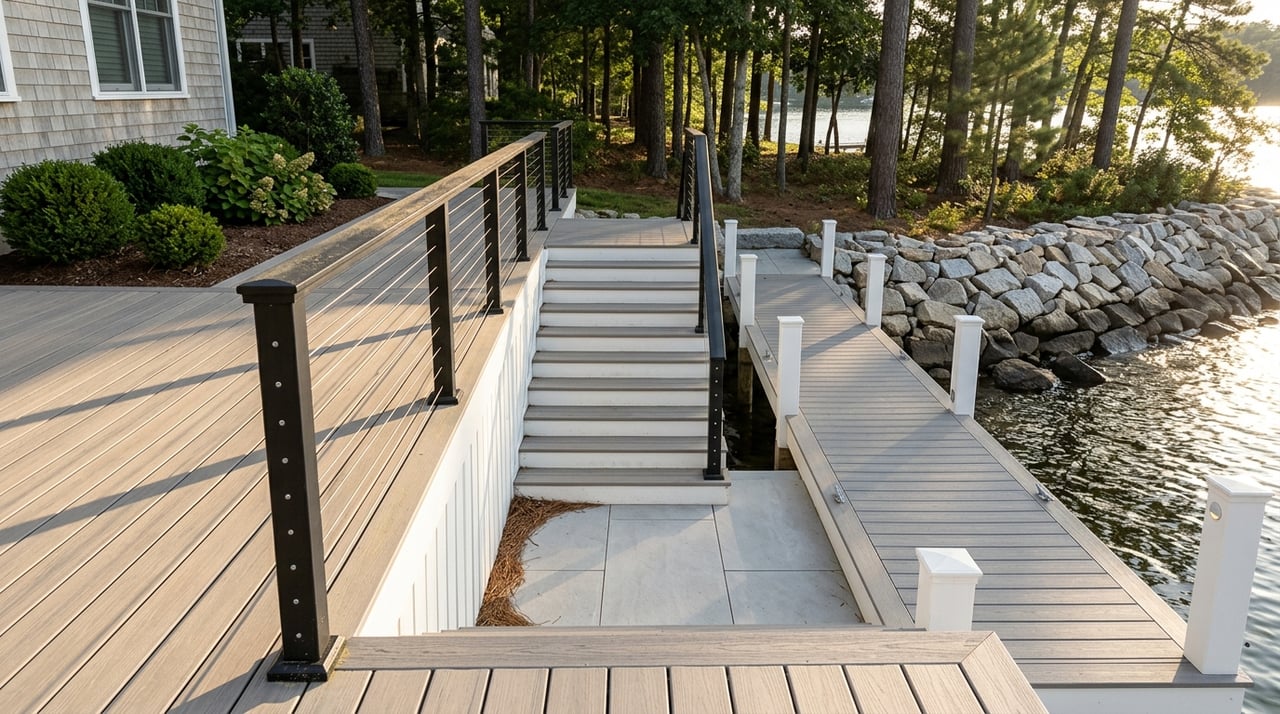
On Smith Lake, the dock is often just as important to buyers as the home itself. Alabama Power treats a wide range of shoreline features as regulated activity, including piers, landings, docks, anchors, decks, staircases, boathouses, access ramps, gazebos, seawalls, rip-rap, dredging, and re-grading. In other words, you should inspect the waterfront improvements with the same care you give the house.
Ask your inspector to look for obvious movement, loose connections, worn decking, and signs of settling or drift. Floating structures should also be reviewed for deteriorated flotation, cable wear, and anchor condition. Alabama Power says anchors and cables must be installed and maintained so they do not create navigation hazards, and flotation must be marine-grade closed-cell material.
If the property has a boathouse, stair system, or access ramp, those features deserve attention too. Wear and tear on the lake can be gradual, and a structure that looks fine from a listing photo may show age or deferred maintenance up close. This is especially true if lake levels have recently shifted.
Lake level changes what you can see
Timing matters during a Smith Lake inspection. If the lake is lower than normal, you may get a better look at shoreline edges, exposed supports, and erosion patterns. Alabama Power has also noted that Smith Lake can run below typical summer levels during drought, which makes current conditions even more important.
Before scheduling inspections for the dock or shoreline, it helps to verify what the lake is doing right now. A property can show very differently at summer pool versus drawdown. That context can shape what you ask for, what you flag, and whether you bring in a specialist.
Verify permits and compliance
One of the most important parts of buying on Smith Lake is confirming that what you see is actually permitted. Alabama Power says it owns the pool properties of Smith Lake and has additional property rights along the shoreline. It also requires a written permit before shoreline work begins, and verbal approval is not enough.
That makes paperwork a major part of your inspection period. If there is a dock, seawall, boathouse, access stairs, rip-rap, grading, or other shoreline work, ask for the permit records and any final close-out documentation available. Do not assume that an existing improvement is automatically approved just because it has been there for years.
Some lots can also have physical limitations. Alabama Power’s guidelines say lots with fewer than 100 linear feet of shoreline may be restricted or may not qualify for structures. In narrow sloughs or sensitive resource areas, added limitations or permitting requirements may also apply.
Look carefully at erosion and bank condition
Shoreline condition is a big part of long-term ownership. Alabama Power says rip-rap and natural bank stabilization are preferred for bank stabilization, while seawalls are evaluated case by case. If a property has visible erosion, patched repairs, leaning walls, washed-out areas, or exposed soil, those are worth a closer look.
You should also look at how previous work was done. Alabama Power says backfill should follow the natural slope, debris or foreign materials cannot be used as backfill, and no new creosote products may be used. In some cases, rip-rap may be required at the toe of a new or reconstructed seawall.
For buyers, the takeaway is simple: shoreline repairs are not just cosmetic. They can involve permitting, cost, and future maintenance. If something looks questionable, ask whether a shoreline contractor or engineer should evaluate it during your due diligence period.
Pay extra attention to moisture inside
Lake homes often need a more careful look for moisture issues. The EPA says moisture control is the key to mold control and recommends indoor humidity ideally between 30% and 50%. Condensation on windows, walls, or pipes can be a warning sign.
During your inspection, pay close attention to crawlspaces, bathrooms, laundry rooms, and any finished lower level. These are common places for humidity, leaks, or poor ventilation to hide. If you notice musty odors, staining, soft materials, or visible condensation, ask follow-up questions.
HVAC systems matter here too. EPA guidance notes that condensation or high humidity around ducts can increase mold risk, and cooling coils, condensate pans, and drain lines should be checked for proper drainage. It is also smart to ask for HVAC service history, filter change habits, and any past moisture or mold remediation records.
Confirm how the septic system has been maintained
Many Smith Lake properties use onsite sewage systems, so septic due diligence is important. Alabama’s current rules say a typical residential onsite sewage system should be pumped every three years. An evaluation of an existing system may also require proof that the tank was pumped within the last three years.
This is one area where buyers should be careful not to rely only on a general home inspection. Alabama’s rules caution that a home inspector’s review does not itself prove the system complies with the rules. If the property has septic, ask for pumping records, any evaluation records, and confirmation that the professional involved is properly licensed through the Alabama Onsite Wastewater Board when required.
If records are missing, that does not always mean there is a problem, but it does mean you should ask more questions. Septic issues can be expensive and disruptive, so this is not the place to guess.
Review flood risk early
Flood questions should come up early, not at the last minute. FEMA says if any portion of a building is within a mapped Special Flood Hazard Area, the building is treated as being in that area for flood insurance and floodplain management purposes. For waterfront property, that can affect insurance costs, future improvements, and overall risk planning.
Ask whether the home is in or near a flood hazard area and request any available flood insurance declarations. This is especially important for homes near the shoreline or with lower elevations. It is much better to understand that picture during due diligence than after closing.
Request records before your inspection period ends
A strong Smith Lake purchase is often built on documentation as much as the physical inspection. The more records you gather early, the easier it is to understand what you are buying and what future work may involve. Good records can also help you sort routine maintenance from true red flags.
Here are the most useful items to request:
- Dock or shoreline permits
- Final permit close-out documentation, if available
- Septic pumping records
- Septic evaluation records
- Survey or plat information
- HOA or subdivision covenants, if applicable
- Flood insurance declarations, if available
- Past repair invoices for docks, seawalls, stairs, or drainage work
If a seller has an organized file for these items, that is helpful. If not, you may need extra time during due diligence to verify details.
Know when to bring in specialists
A general home inspection is the foundation, but not always the finish line. If the inspector flags dock movement, shoreline instability, unusual grading, flood-easement questions, or concerns about a walled storage structure, a specialist may be the right next step. Alabama Power’s guidelines note that some structures in the flood easement must be elevated or vented to accommodate flood storage, and it may require certification from a licensed engineer or contractor.
That is why local guidance matters so much on Smith Lake. You want to know not only whether something works today, but whether it is documented, compliant, and practical for the way you plan to use the property. This is where local experience can save time and stress.
Buying on Smith Lake should feel exciting, not uncertain. When you take the time to inspect the home, the dock, the shoreline, and the records together, you give yourself a clearer picture of the property and fewer surprises later. If you want local guidance from a team that lives on the lake and understands how these details affect real buyers, connect with iHeart Smith Lake.
FAQs
What should a Smith Lake home inspection include beyond the house?
- A Smith Lake inspection should also consider the dock, shoreline structures, erosion, permit records, moisture-prone interior areas, septic documentation, and flood risk.
Why do lake levels matter during a Smith Lake property inspection?
- Smith Lake levels change seasonally, so lower or higher water can hide or reveal issues like erosion, exposed footings, dock movement, and previous shoreline repairs.
Do Smith Lake docks and shoreline improvements need permits?
- Yes. Alabama Power requires written permits for shoreline work, and buyers should ask for permit and close-out records for docks, boathouses, seawalls, rip-rap, stairs, and related improvements.
Should a Smith Lake buyer get a septic inspection?
- If the property uses an onsite sewage system, you should request pumping and evaluation records and consider a septic-specific review because a general home inspection does not prove septic compliance.
What records should buyers request for a Smith Lake waterfront home?
- Buyers should request dock and shoreline permits, final permit documentation, septic records, survey or plat information, HOA or subdivision covenants, and flood insurance declarations if available.
When should a Smith Lake buyer call a specialist?
- You may need a specialist if the inspection raises concerns about dock safety, shoreline stability, septic performance, flood-easement issues, or structures that may need engineering or compliance review.