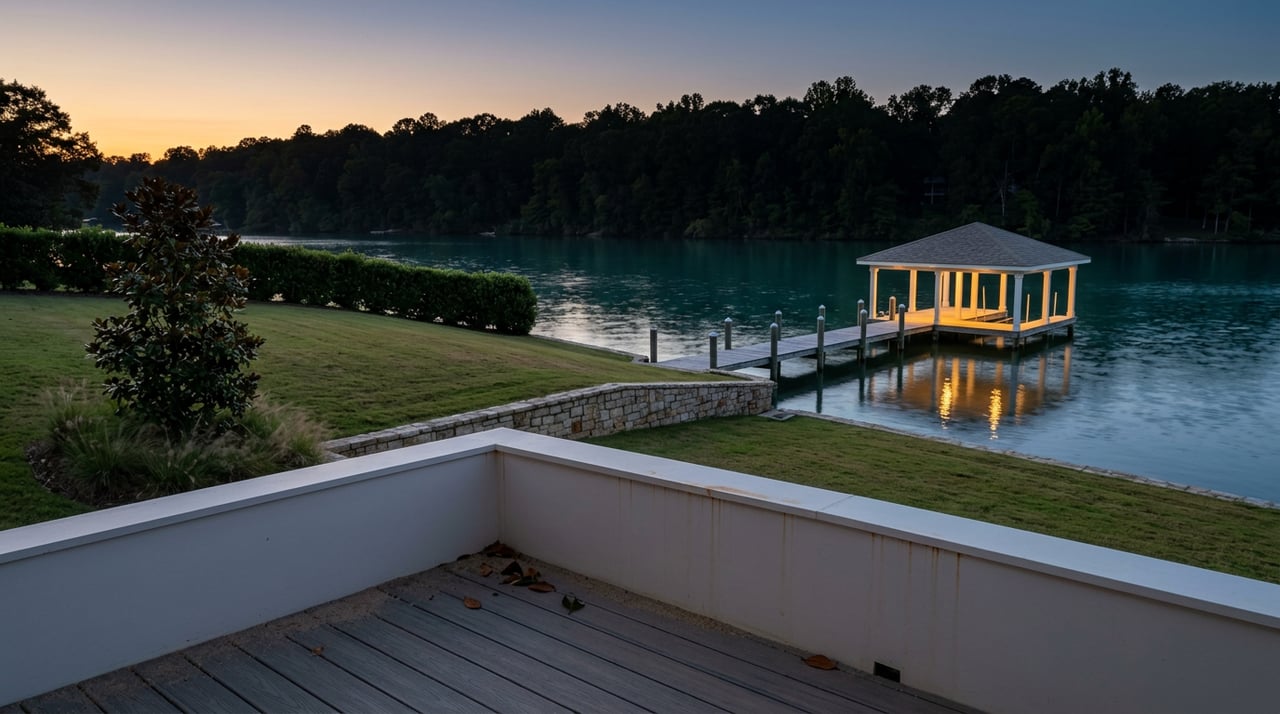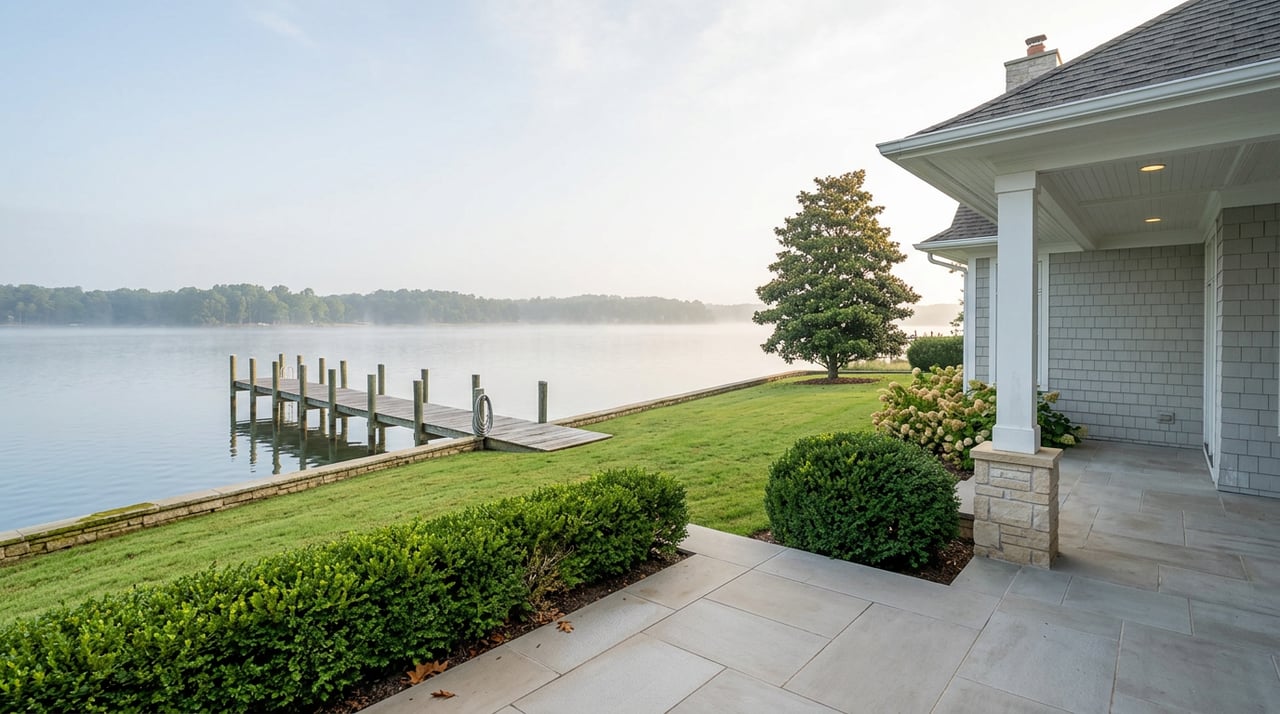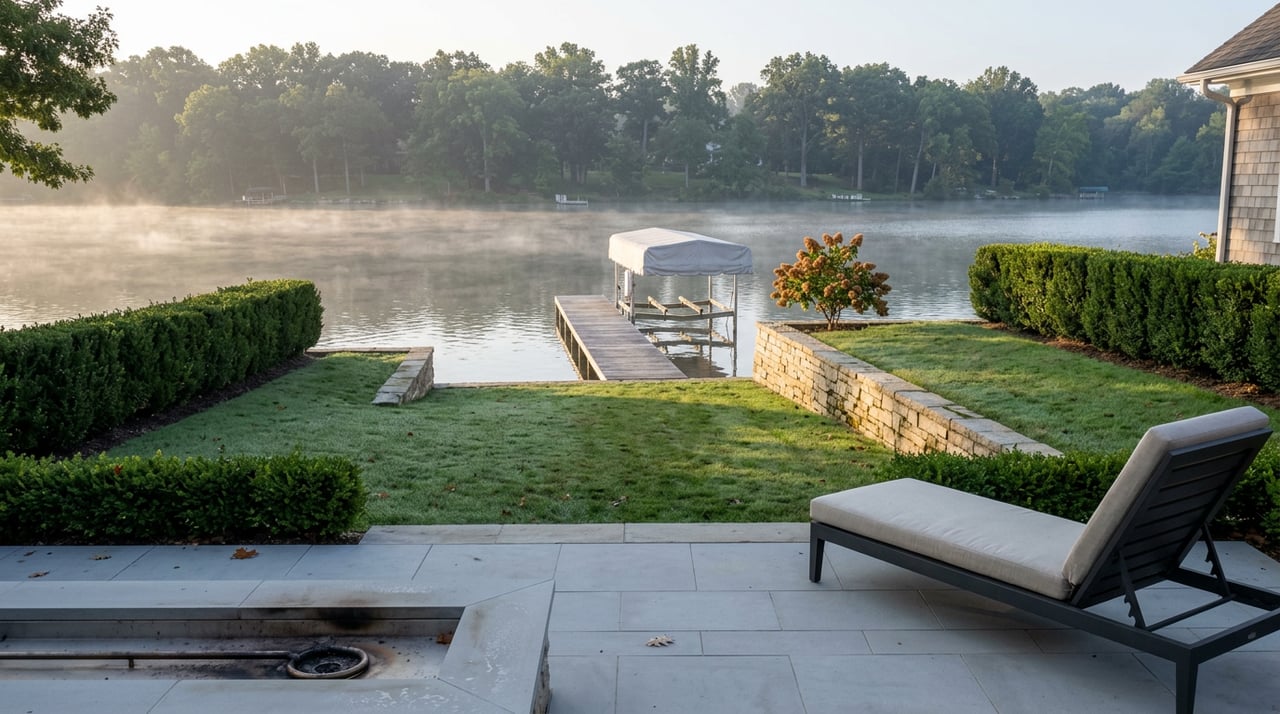
Every out-of-area buyer who calls about Smith Lake asks the same first question: what's it selling for. Fair enough. In the first quarter of 2026, waterfront homes across the lake closed at an average of 87.7% of list price, a real step back from the tighter bidding of the prior year, while active inventory roughly doubled over the same stretch. That number gets repeated in every market update, and it's accurate. It also tells you almost nothing about whether a specific Smith Lake property will actually function as waterfront once the season turns, because the number that matters more sits under the dock, not on the listing sheet.
Right now, through the end of November, Smith Lake is doing something most lakes buyers compare it to don't do at all. It's draining, on purpose, by design, and by a lot.
A Lake Built to Empty Itself Every Fall
Alabama Power classifies Smith Lake as a storage reservoir, which puts it in a different category than run-of-river lakes like Bankhead or Holt, where water flows in and out at roughly the same rate all year. Storage lakes hold water back and release it on a schedule, and Smith Lake's schedule is published and fixed. Full summer pool sits at 510 feet above mean sea level, and the company's operating guide begins lowering the lake on July 1, continuing the drawdown until it settles near winter pool at 496 feet by the end of November. That's a 14-foot drop, done every year, to create storage capacity ahead of winter and spring rain.
No county ordinance requires this. No HOA has a say in it. It happens because Smith Lake was built specifically to store water for flood control and hydropower, and Alabama Power manages the schedule the same way every year, spring refill included, bringing the lake back to summer pool by early May.
For a full-time resident, that cycle is just how the year works. For a buyer comparing two waterfront lots priced within a few thousand dollars of each other, it's the difference between a dock that stays usable through the off-season and one that doesn't.
Same Fourteen Feet, Two Very Different Docks
A drop of 14 feet doesn't hit every shoreline the same way, because it isn't the water that varies, it's what's underneath it. Stretches of the Sipsey Fork and sections of Ryan Creek and Rock Creek run along steep, rocky drop-offs, where the lake bottom falls away quickly from shore. A dock in that kind of cove can lose a foot of water and barely notice. A flatter, clay-bottomed cove behaves differently. The same 14-foot drop can leave a dock resting on exposed mud instead of floating, simply because the lake bottom there was shallow to begin with.
Here's the practical version of that difference, based on the depth guidance Alabama Power's own shoreline materials point buyers toward when evaluating a lot:
| Shoreline type | At full pool (510 ft) | At winter pool (496 ft) |
|---|---|---|
| Steep, rocky drop-off (parts of the Sipsey Fork, sections of Ryan Creek and Rock Creek) | Dock floats in deep water, indistinguishable from a summer photo | Several feet of water typically remain under the dock, boat access largely intact |
| Flat, shallow clay bank | Dock floats fine, looks identical in listing photos | Dock can rest on exposed mud, effectively unusable until spring refill |
The general rule of thumb worth carrying into any tour: a dock that holds 5 to 6 feet of water at winter pool will keep working through the off-season. Anything shallower than that becomes a bet on how much of the fall and winter you're willing to go without boat access.
A June showing cannot tell you which category a property falls into, because at full pool, both lots look the same. The only reliable way to see the difference is to look at the shoreline during the window when the lake is actually low, which is happening right now.
Why the 2026 Market Actually Works in a Buyer's Favor Here
For most of the last several years, Smith Lake buyers didn't have the luxury of waiting out a drawdown. Listings moved fast, competition was tight, and anyone who tried to time a purchase around November water levels risked losing the property to someone who wrote an offer in July. That pace has changed. With inventory roughly doubling year over year in the first quarter of 2026 and homes settling under asking price more often than not, buyers finally have room to be patient, and patience is exactly what this particular piece of diligence requires.
That shift matters most in the $500,000 to $1 million range, where buyer demand has concentrated this year. At that price point, the difference between a rock-shelf lot and a clay-bottom cove tends to show up directly in how the dock performs, rather than getting masked by the dredging, engineered seawalls, or elevated boathouses that higher-end builds sometimes use to smooth over shallow water. In other words, the buyers most likely to be shopping this year are also the buyers for whom this distinction carries the most weight.
What to Actually Check Before You Write an Offer
A few questions turn this from an abstract risk into something you can verify before closing:
- Ask when the listing photos were taken relative to today's date. A photo from June tells you nothing about November.
- Ask what the water depth at the dock measures right now, not what it measured at signing or at the last appraisal.
- If you can, ask a neighbor on the same cove how low the water typically gets by late fall. Long-time residents usually know this without having to check anything.
- Note the creek arm the property sits on and ask your agent whether that stretch runs rocky or flat. It's local knowledge, not something an MLS field captures.
None of this requires a permit or an inspector. It requires being willing to look at the lake when it isn't at its most photogenic, which is precisely the window most buyers skip.
A Few Questions Worth Settling Before You Tour
Does the whole lake drop the same 14 feet? In elevation, yes, the drawdown lowers Smith Lake uniformly from 510 feet to roughly 496 feet. What changes cove to cove is how that drop translates into usable water at a specific dock, which depends entirely on the shoreline's slope.
When does the lake come back up? Alabama Power's operating guide raises the lake through spring, returning it to summer pool ahead of the May through June recreation season, so the cycle resets every year on the same rhythm.
Is a dock sitting in mud in November automatically a dealbreaker? Not automatically, but it's worth pricing into an offer rather than ignoring. A flat-cove lot with a seasonal shallow spell isn't the same purchase as a rock-shelf lot with year-round depth, even if both are listed as Smith Lake waterfront at the same price.
We watch this cove by cove because we live on the water we're showing, not because a spreadsheet told us the drawdown mattered. If you're comparing Smith Lake properties this fall and want to know which stretches of shoreline actually hold their value through winter pool, iHeart Smith Lake can walk a specific lot with you while the lake is still low enough to show you the truth. We've also written about the permitting side of dock ownership if you're weighing what it takes to build or transfer one once you've found the right shoreline.
Explore Smith Lake Homes